In March 2026, the Federal Court handed down its decision in ASIC v Bekier, the Star Entertainment case, and every director in Australia and New Zealand got a timely reminder of how governance records may later be read.
The Court found that Star's former CEO, Matthias Bekier, and former Chief Legal and Risk Officer, Paula Martin, breached their duties in relation to serious risks associated with money laundering and criminal activity. ASIC's case against the seven former non-executive directors was dismissed, and ASIC later confirmed it would not appeal that dismissal.
That outcome should not be mistaken for a lesson that records matter less. ASIC's case against the non-executive directors failed because the Court was not satisfied, on the pleaded case and evidence, that they had breached their duties. But the judgment still leaves boards with an uncomfortable reminder. When later scrutiny turns to what a board saw, questioned and decided, contemporaneous documents can carry significant weight.
Minutes are not simply meeting notes. They are part of the evidence of governance. The lesson is not that we should record every word. It is that the formal record needs to show the essence of the board's engagement: what was considered, what was challenged, what was decided, and why.
AI minute-taking tools have arrived at exactly the moment many boards are feeling this pressure. They can help produce transcripts, identify actions, structure discussion and prepare first-draft minutes far faster than traditional manual processes. For stretched boards, company secretaries and volunteer directors, that can be a meaningful improvement. It is not a governance shortcut.
The question is not simply, should we use AI to help with minutes? The better question is: what records are we creating, who controls them, and how long do they live?
Before AI is used for board minutes, the board needs a clear position on the basics: who is notified and how, who owns the review process, what inputs may be used, what happens to the raw transcript after minutes are approved, and how privileged or in-camera discussion is handled.
In Australia, s251A of the Corporations Act requires companies to keep minute books recording proceedings and resolutions of directors' meetings within one month, with minutes signed by the chair within a reasonable time. Minutes recorded and signed in this way are evidence of the proceedings and resolutions unless the contrary is proved. In New Zealand, Schedule 3 of the Companies Act 1993 requires the board to ensure that minutes are kept of all proceedings at meetings of the board.
Either way, minutes are not casual notes. They are the record our boards may later need to stand behind.
A transcript is a different creature. Minutes are a curated account of the proceedings, decisions, key issues raised and rationale for decisions. A transcript is a raw capture of discussion: the loose aside, the unfinished thought, the question a director asked to test a position they did not necessarily hold.
That distinction matters. The AICD and Governance Institute's 2025 Joint Statement is clear that there is no prohibition on using AI to help prepare draft minutes. It is equally clear that AI should not be the sole tool relied on, and that human review and evaluative judgment remain central. Retained recordings, transcripts and AI-generated draft minutes can be discoverable and admissible, may conflict with the formal minutes, and may create privilege risks if legal advice or sensitive material is captured without proper controls.
This is where the real risk sits. Not in AI itself, but in the uncontrolled record ecosystem AI can create.
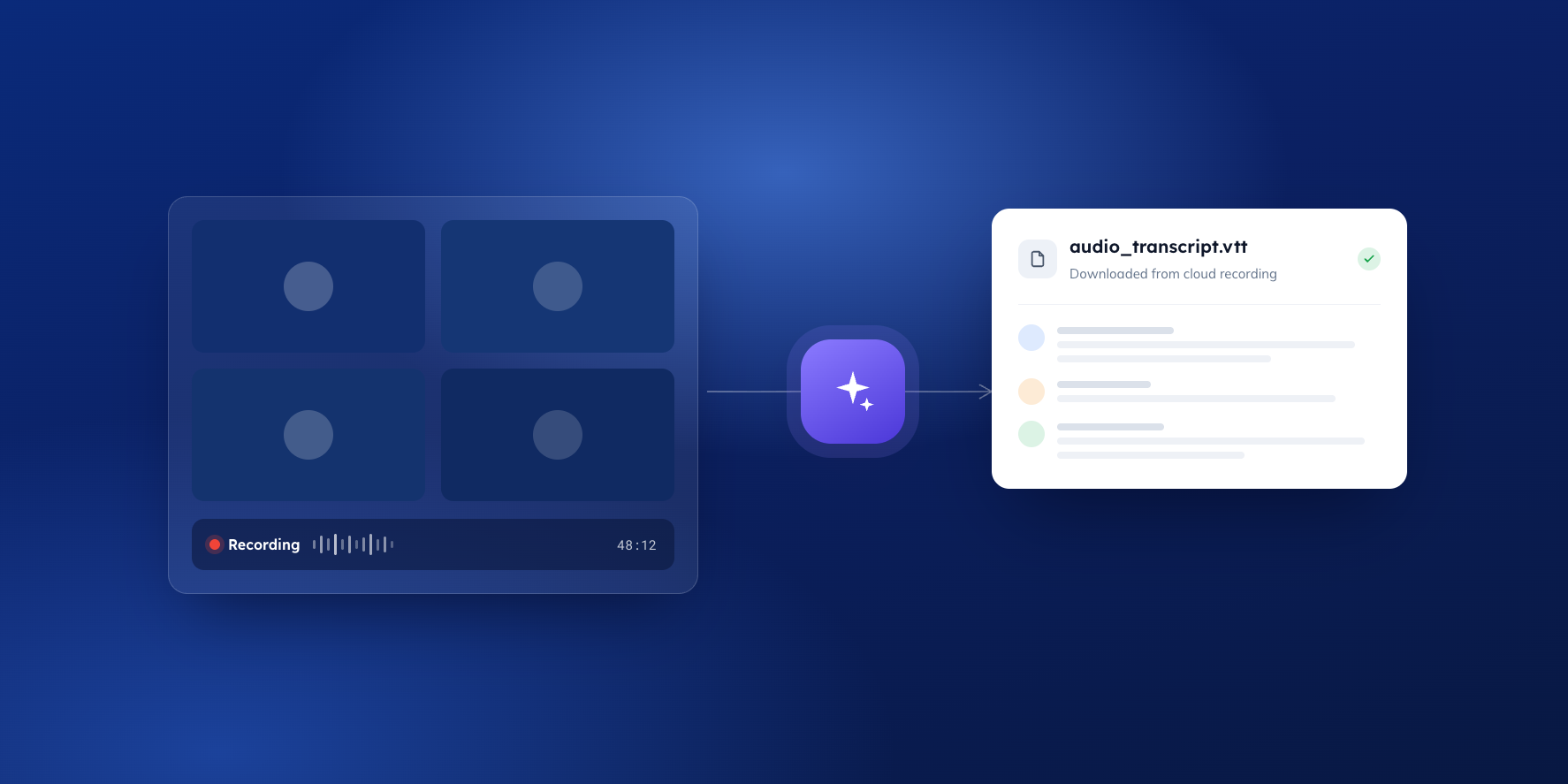
One meeting can now produce a conferencing recording, a transcript, an AI-generated summary, draft minutes, action items, personal notes, a director's private AI note-taker output, and the final approved minutes. Before the board has reviewed the draft, one conversation may already exist in several places, under different access settings, retention rules and security controls. That is not better governance. It is record proliferation.
The discipline is not complex, but it does need to be deliberate.
Our boards should agree on a single designated capture process for the meeting, and be explicit that personal recording devices and unofficial AI note-takers are not part of it.
The board should agree what the transcript is for. In most cases, it should feed the draft minutes and nothing else. It should not become a shadow set of minutes, be auto-distributed without review, or sit indefinitely in a conferencing platform because nobody remembered where the original file lived.
Once the minutes have been reviewed, approved and signed, the board's retention policy should determine what happens to the raw material. For boards without a retention policy, a one-page protocol adopted by resolution is a practical starting point. If the protocol says recordings and transcripts are deleted after the approved minutes are finalised, deletion needs to occur at the source, not just inside the tool that processed the transcript.
Deletion should be routine and policy-driven, never reactive. If litigation, a regulatory inquiry or a serious dispute is in prospect, routine deletion should pause, potentially relevant material should be preserved, and legal advice should be obtained before deletion resumes. That call should sit with a named role, usually the company secretary or chair, not whoever happens to administer the software. For boards without counsel on tap, the minimal version is the same: stop deleting, preserve everything, get advice before resuming.
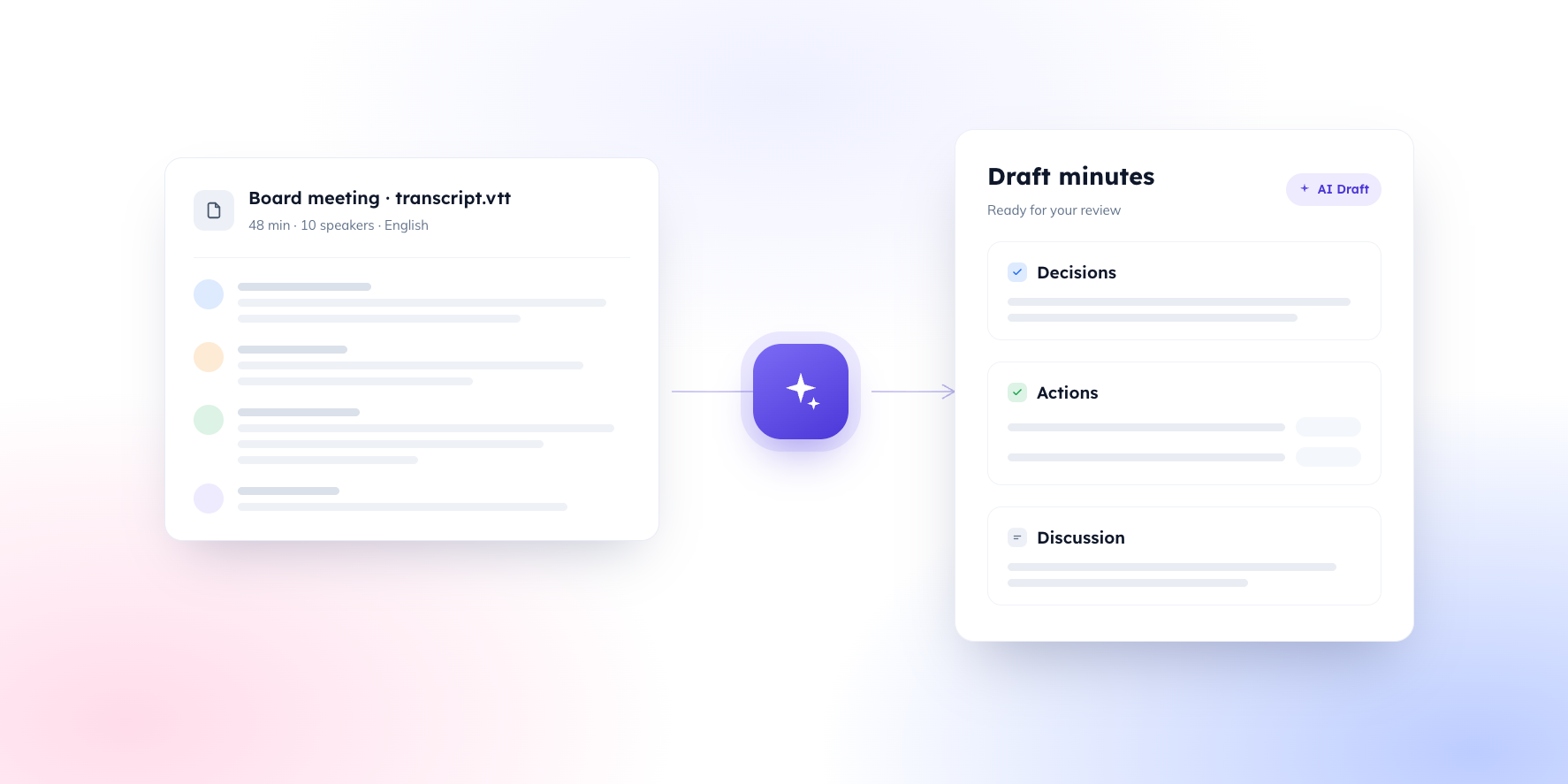
Purpose-built governance tools are beginning to design around this record lifecycle rather than simply bolting transcription onto board administration. BoardPro's AI Minutes, for example, is designed around uploading a meeting transcript, mapping it to the agenda structure and generating draft minutes for human review.
But our responsibility as boards goes wider than any one provider. Five questions belong in any board's assessment of an AI minutes platform:
-
Where is our data hosted, and who are the sub-processors?
-
Are our transcripts, prompts, papers or minutes used to train AI models?
-
What is retained, what is deleted, and when?
-
Do the platform's access controls mirror our existing board permissions?
-
What audit trail exists so we can reconstruct how the draft minutes were produced?
A non-answer to any of these questions should be treated as a governance risk, not a procurement detail.
Two further questions belong to us as boards. Does everyone in the room understand that the meeting is being recorded or transcribed, and have we agreed to that as a governance practice rather than letting it become a habit? And what happens when we discuss legal advice, in-camera matters or highly sensitive issues? In many cases, the safest protocol will be to pause transcription for those parts of the meeting so privileged or sensitive discussion never enters the transcript in the first place.
None of this argues against AI in the boardroom. Used well, AI can reduce administrative burden, improve consistency and help boards get to a draft faster. For some boards, particularly smaller organisations and not-for-profits, that may be the difference between minutes being completed promptly or sitting unfinished for weeks. For other boards, especially listed entities or highly regulated organisations, the better answer may be a more cautious workflow or a human-typed minute with no recording at all. Both positions can be legitimate.
The risk is drift: multiple records of one meeting, no agreed source of truth, and no clear decision about which record the board owns.
Bekier reminds us what can happen when the formal record does not adequately show the board's engagement. AI minutes raise the opposite risk: not too little record, but too many unmanaged records. Between those two failures sits the answer: a record the board crafts deliberately, drafted with whatever assistance we choose, and owned by no one but us.
Resources for your board
When you're ready here's how BoardPro can help
- New to BoardPro? Start a free trial to see how AI Minutes works with your board's own meetings.
- Book a demo – see BoardPro in action in this 30-minute demo. Book here.